
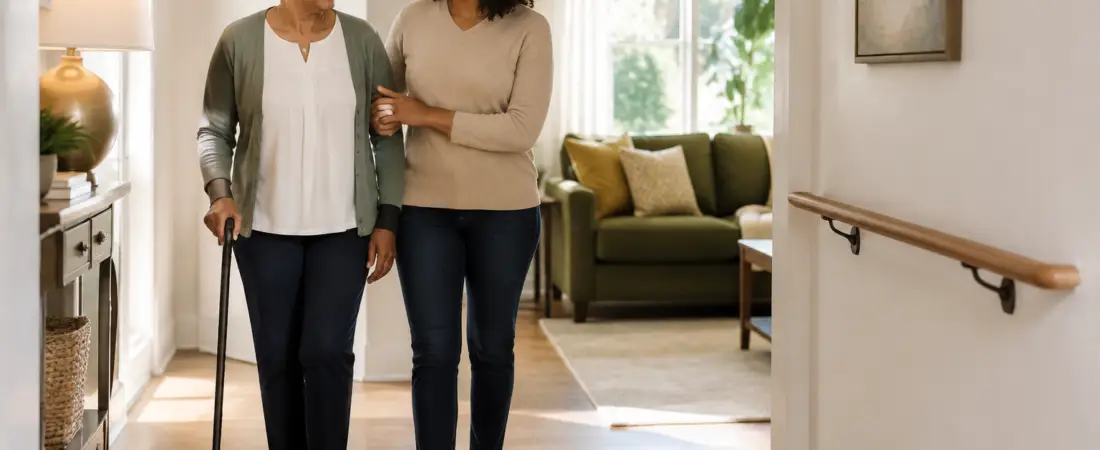
A safer home supports independence. Families do not need to turn a familiar home into a hospital room; the goal is to identify preventable hazards while preserving comfort, routine, and dignity.
Start with the walking path
Walk the same routes your loved one uses every day: bedroom to bathroom, favorite chair to kitchen, entrance to car. Look for clutter, cords, unstable furniture, loose rugs, dim lighting, or narrow pathways that could make movement harder.
Living room and hallways
- Keep commonly used pathways clear.
- Secure or remove loose rugs when they create a tripping hazard.
- Move electrical cords away from walking areas.
- Use stable seating that is easy for the person to enter and exit.
- Improve lighting, especially between the bedroom and bathroom.
Bathroom
- Use non-slip surfaces in wet areas.
- Consider professionally installed grab bars where appropriate.
- Keep toiletries within easy reach so the person is not stretching or bending unnecessarily.
- Make sure the route to the toilet is clear, especially at night.
The CDC’s STEADI program includes a home fall-prevention checklist for older adults and family caregivers. Families should discuss individual fall risks and equipment needs with an appropriate healthcare professional.
Bedroom
- Keep a light within easy reach.
- Keep eyeglasses, mobility devices, and frequently used items in consistent locations.
- Make sure clothing and bedding do not create floor hazards.
- Avoid furniture arrangements that force tight turns.
Kitchen
- Store everyday items between waist and shoulder height when practical.
- Keep floors dry and uncluttered.
- Check that frequently used food is easy to see and access.
- If memory or judgment changes are creating cooking-safety concerns, discuss a safer routine with the family and appropriate professionals.
Stairs and entrances
- Keep steps clear.
- Ensure handrails are secure where present.
- Improve lighting at the top and bottom of stairs.
- Keep outdoor walkways clear of leaves, ice, cords, and other hazards.
Do not forget the person’s preferences
Safety changes work best when the older adult is part of the decision. Explain the concern, ask what solutions feel acceptable, and avoid removing meaningful belongings without discussion unless there is an immediate emergency.
Monthly five-minute safety check
- Has anything changed in walking, balance, vision, or use of a mobility device?
- Has new furniture or clutter changed the walking path?
- Are lights working where they are needed?
- Are bathroom and entry areas still easy to navigate?
- Has there been a fall, near-fall, or new fear of falling that should be reported to a healthcare professional?
Trusted resource: See the CDC STEADI resources for older adults and family caregivers.
Olivia family tip: Make one or two meaningful safety improvements at a time and reassess. The safest plan is one the older adult can live with comfortably.
Educational information only; not medical, occupational-therapy, construction, or individualized safety advice. Seek professional guidance for specific fall risks, mobility needs, or home modifications.